Peptide Storage and Handling: Complete Laboratory Guide
Proper storage and handling of research peptides is critical for maintaining compound integrity, ensuring experimental reproducibility, and avoiding costly degradation. This guide covers best practices for receiving, storing, reconstituting, and using peptides in research settings.
Receiving and Initial Inspection
Upon receiving lyophilized peptides, immediately verify the package condition — check for intact vacuum seals, verify dry ice is still present (if shipped frozen), inspect vials for cracks or powder displacement, and record the lot number and date received.
Storage Conditions
| Form | Temperature | Duration | Notes |
|---|---|---|---|
| Lyophilized (sealed) | -20°C to -80°C | 2+ years | Most stable form; protect from moisture |
| Lyophilized (opened) | -20°C | 6-12 months | Re-seal under nitrogen/argon if possible |
| Reconstituted | 2-8°C | 7-30 days* | *Varies by peptide; use bacteriostatic water |
| Reconstituted (frozen) | -20°C | 1-3 months | Aliquot to avoid freeze-thaw cycles |
Reconstitution Protocols
Choosing the Right Solvent
- Bacteriostatic Water (BAC water): Most common for peptides. Contains 0.9% benzyl alcohol as preservative. Suitable for multi-use vials.
- Sterile Water: For single-use applications or benzyl alcohol-sensitive assays.
- Sterile Saline (0.9% NaCl): When isotonic solution is required.
- Acetic Acid (0.1%): For peptides with poor aqueous solubility at neutral pH.
- DMSO: Last resort for hydrophobic peptides; use minimal volume then dilute.
Step-by-Step Reconstitution
- Remove peptide vial from freezer and allow to equilibrate to room temperature (15-20 minutes)
- Clean the vial stopper with an alcohol swab
- Draw the appropriate volume of solvent using a sterile syringe
- Insert the needle through the stopper and direct the solvent down the inside wall of the vial
- Allow the solvent to slowly saturate the lyophilized cake — do not inject directly onto the powder
- Let stand for 2-3 minutes, then gently swirl (never vortex or shake vigorously)
- Inspect for complete dissolution — solution should be clear without visible particles
- Record the reconstitution date, solvent used, and final concentration on the vial
Common Degradation Pathways
- Oxidation: Methionine and cysteine residues are especially susceptible. Minimize air exposure, use nitrogen overlay.
- Deamidation: Asparagine and glutamine residues undergo deamidation at neutral to alkaline pH. Store at slightly acidic pH when possible.
- Hydrolysis: Peptide bonds can cleave in aqueous solution. Keep reconstituted peptides refrigerated and use promptly.
- Aggregation: High concentrations and temperature fluctuations promote aggregation. Maintain consistent storage temperature.
- Adsorption: Peptides can adsorb to glass and plastic surfaces. Use low-binding tubes/vials for dilute solutions.
Freeze-Thaw Best Practices
Repeated freeze-thaw cycles are one of the most common causes of peptide degradation. Best practices include aliquoting reconstituted peptide into single-use volumes immediately after reconstitution, using screw-cap microtubes with O-rings to prevent contamination, flash-freezing aliquots in liquid nitrogen or dry ice before placing in -20°C freezer, and limiting freeze-thaw to a maximum of 3 cycles for most peptides.
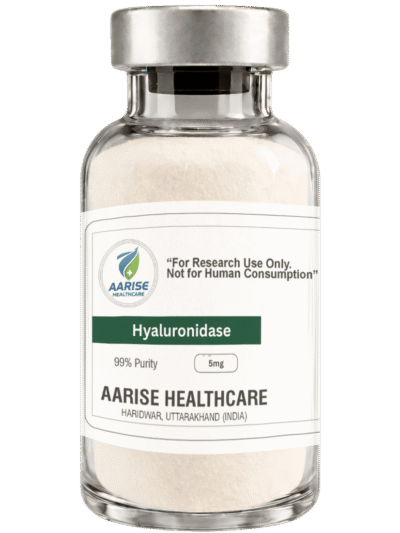
Research Compounds from Aarise Healthcare
Aarise Healthcare supplies over 300 research-grade peptides, hormones, and steroids with comprehensive quality documentation. Every batch includes HPLC purity analysis (≥98%), mass spectrometry confirmation, and detailed storage recommendations. Our compounds ship with proper cold-chain packaging to maintain integrity during transit. Browse our catalog or contact us for custom compound requests.
Related Articles
Also from Aarise Group: