





Your cart is currently empty!.
You may check out all the available products and buy some in the shop.
Continue Shopping
In Stock
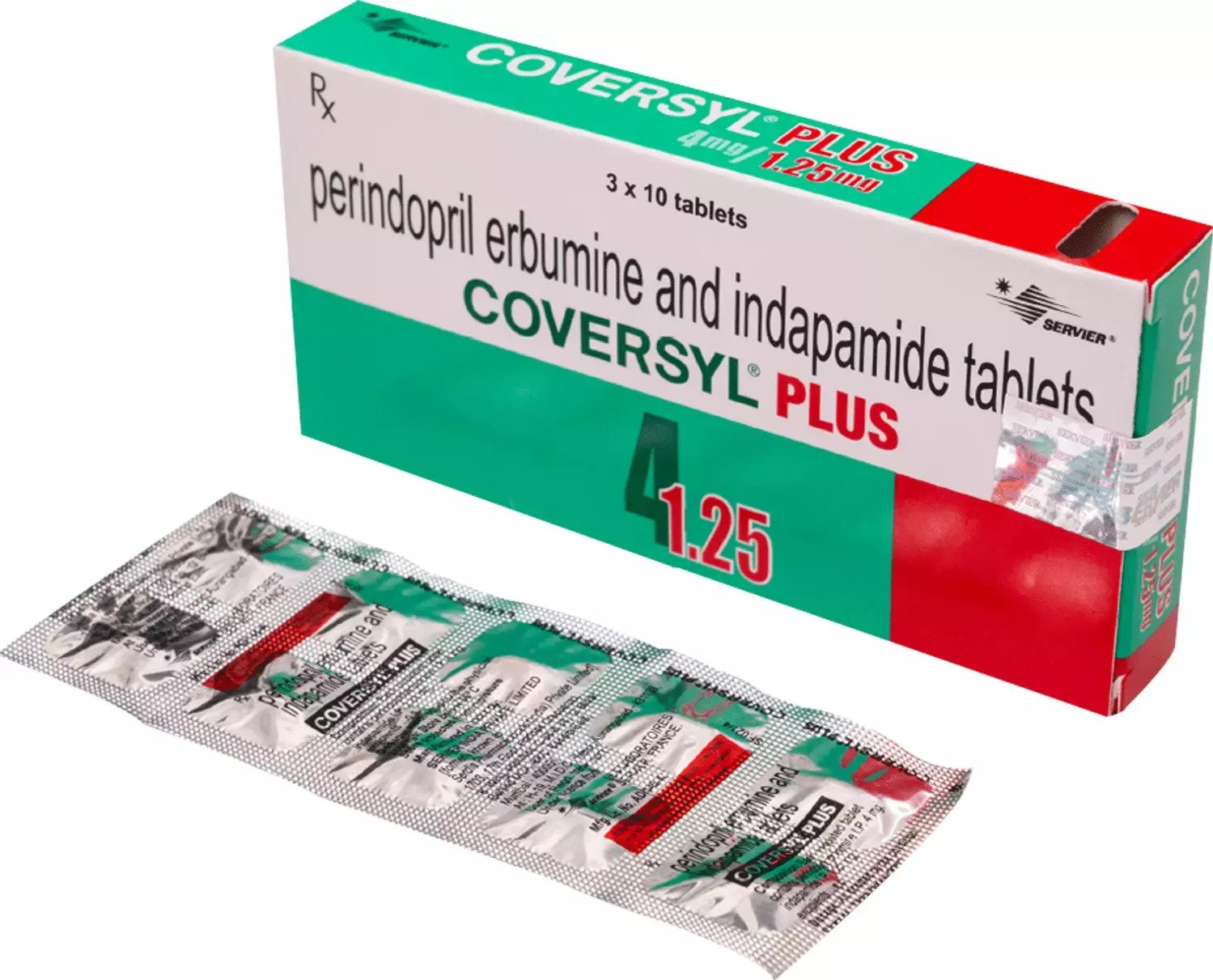
Perindopril + Indapamide Tablets 4mg + 1.25mg | Cardiac / Hypertension
Disclaimer: Products listed on this website are intended for qualified business buyers, research, formulation, compounding, or regulated pharmaceutical use only. Products are not intended for direct consumer use. Import permission, registration, customs clearance, and local regulatory compliance are the responsibility of the buyer in their respective country.


This document summarizes key clinical and product information for the combination tablet containing Perindopril erbumine 4 mg and Indapamide 1.25 mg (commonly marketed as Coversyl Plus). The content includes composition, indications, dosage, contraindications, precautions, side effects, drug interactions, storage and patient counseling points. Source: 1mg product listing and standard prescribing information.
Brand name: Coversyl Plus.
Each film-coated tablet contains: Perindopril erbumine 4 mg + Indapamide 1.25 mg.
Dosage form: Oral tablet. Typical pack sizes: blister strips (10 x 10 tablets) or as marketed locally. Manufacturer details and price vary by country and vendor; check the provided reference link for current local availability and price.
Therapeutic class: Antihypertensive combination (ACE inhibitor + Thiazide-like diuretic).
Mechanism of action: Perindopril (an ACE inhibitor) reduces angiotensin II formation, causing vasodilation and lowering blood pressure; it also reduces aldosterone secretion. Indapamide (a thiazide-like diuretic) promotes natriuresis and diuresis, reducing plasma volume and peripheral resistance. The combination provides additive antihypertensive effects and may improve blood pressure control compared with either agent alone.
Treatment of essential hypertension in patients for whom combination therapy with an ACE inhibitor and a thiazide-like diuretic is appropriate.
Used when monotherapy with either agent alone does not provide adequate blood pressure control or initial combination therapy is clinically indicated.
Usual adult dose: One tablet daily (Perindopril 4 mg + Indapamide 1.25 mg). The tablet is usually taken in the morning, with or without food. Dose adjustments should be individualized based on blood pressure response and tolerability.
Elderly: Use with caution; monitor renal function and electrolytes. No routine initial dose adjustment solely on age, but start low if clinically appropriate.
Renal impairment: Use caution. In moderate to severe renal impairment, adjust therapy and monitor renal function and electrolytes closely. Combination products may not be suitable for severe renal impairment—consider separate dosing and specialist advice.
Hepatic impairment: Use cautiously; indapamide may require special consideration in severe hepatic disease.
Pregnancy and breastfeeding: Contraindicated in pregnancy (ACE inhibitors can cause fetal harm). Avoid during breastfeeding unless benefits outweigh risks—consult prescriber.
History of angioedema related to previous ACE inhibitor therapy.
Hypersensitivity to perindopril, indapamide, sulfonamides (indapamide is sulfonamide-derived), or any component of the formulation.
Pregnancy and breastfeeding (ACE inhibitors are teratogenic).
Severe renal artery stenosis or bilateral renal artery stenosis—risk of renal function deterioration.
Severe renal impairment (depending on local labeling) or anuria.
Before and during treatment, monitor renal function (serum creatinine), electrolytes (particularly potassium and sodium), and blood pressure. Monitor for signs of hypotension, especially in volume-depleted patients.
Hyperkalemia risk: ACE inhibitors can increase serum potassium—monitor in patients taking potassium supplements, potassium-sparing diuretics, or with renal impairment.
Hyponatremia and electrolyte imbalance: Indapamide can cause hyponatremia, hypokalemia; monitor serum sodium and potassium.
Renal function: Acute renal failure has been reported with ACE inhibitors in patients with renal artery stenosis or volume depletion—monitor closely.
Cough: Persistent dry cough may occur with ACE inhibitors—consider switching if troublesome.
Angioedema: Potentially serious; discontinue immediately if angioedema occurs and provide urgent medical care.
Surgery/anesthesia: May cause hypotension—inform anesthetist; consider withholding ACE inhibitor pre-operatively in some cases per clinician guidance.
Diabetes and elevated potassium: Use caution with other agents that increase potassium.
Dizziness, lightheadedness (especially on standing or initial therapy).
Dry cough (ACE inhibitor-related).
Headache.
Fatigue.
Electrolyte disturbances: hypokalemia (indapamide) or hyperkalemia (perindopril interaction), hyponatremia.
Gastrointestinal upset (nausea) in some patients.
Angioedema (facial, periorbital, laryngeal swelling) — medical emergency.
Severe hypotension, particularly in volume-depleted patients.
Acute renal failure.
Severe electrolyte abnormalities (pronounced hyponatremia or significant hypokalemia).
Clinically important interactions to consider:
Potassium-sparing diuretics, potassium supplements, or salt substitutes containing potassium: increase risk of hyperkalemia with ACE inhibitors.
NSAIDs (including selective COX-2 inhibitors): may reduce antihypertensive effect and increase risk of renal impairment; combined use requires monitoring.
Other antihypertensive agents: additive blood pressure-lowering effects—monitor for hypotension.
Lithium: ACE inhibitors may increase lithium levels—monitor lithium levels closely.
Antidiabetic agents (e.g., insulin, sulfonylureas): indapamide may potentiate hypoglycemic effects.
Drugs affecting renin-angiotensin-aldosterone system (ARBs, aliskiren): combined use with ACE inhibitors may increase risk of renal impairment, hypotension, and hyperkalemia—avoid or use with caution per guidelines.
Symptoms of overdose may include severe hypotension, dizziness, syncope, electrolyte disturbances and renal impairment. Management is supportive and may require intravenous fluids, monitoring of renal function and electrolytes, and symptomatic treatment. In cases of significant hypotension, place the patient in the supine position and administer fluids. Consult a poison control center or emergency medicine for guidance.
Pregnancy: Contraindicated. ACE inhibitors can cause fetal injury or death when used in the second and third trimesters.
Breastfeeding: Use caution—perindopril is excreted in breast milk in small amounts; discuss with prescriber.
Children: Safety and efficacy in pediatric patients not well established for this combination—follow pediatric specialist guidance.
Store in a cool, dry place away from direct sunlight and moisture. Keep out of reach of children. Follow the manufacturer’s printed storage instructions on the pack.
Take one tablet daily, preferably in the morning, with or without food. Do not stop therapy abruptly without consulting your doctor.
Stand up slowly from sitting or lying down to reduce the risk of dizziness from low blood pressure.
Report symptoms such as swelling of the face, lips, tongue or throat, difficulty breathing, fainting, severe dizziness, persistent cough, or signs of electrolyte imbalance (muscle cramps, weakness).
Avoid potassium supplements or salt substitutes containing potassium unless advised by your doctor.
Inform your doctor about all other medications you take, including OTC NSAIDs, supplements, and herbal products.
If you become pregnant or plan to become pregnant, stop the medication and contact your healthcare provider immediately.
| Item | Details |
|---|---|
| Combination | Perindopril erbumine 4 mg + Indapamide 1.25 mg |
| Indication | Essential hypertension |
| Typical dose | One tablet once daily |
| Major contraindications | Pregnancy, previous ACE inhibitor–related angioedema, severe renal artery stenosis, hypersensitivity |
| Key monitoring | BP, renal function, serum electrolytes (K+, Na+) |
| Common side effects | Dizziness, cough, headache, electrolyte disturbances |
| Serious risks | Angioedema, acute renal failure, severe hypotension |
| Patient advice | Avoid potassium supplements, report swelling or breathing difficulty, do not stop abruptly |
| Product Name | Perindopril + Indapamide Tablets |
| Category | All Medicines, Cardiac / Hypertension |
| Form | Raw Powder |
| Grade | As per available specification |
| Documents | COA, MSDS, Invoice, Packing List |
| Packing | As per order quantity |
| MOQ | On request |
| Shipment | Air cargo / courier / buyer-approved route |
| Use | B2B, formulation, compounding, research & qualified buyer supply |
| Disclaimer | Subject to buyer country regulations |
| Strength | 4mg + 1.25mg |
|---|

Only logged in customers who have purchased this product may leave a review.
Disclaimer: Products listed on this website are intended for qualified business buyers, research, formulation, compounding, or regulated pharmaceutical use only. Products are not intended for direct consumer use. Import permission, registration, customs clearance, and local regulatory compliance are the responsibility of the buyer in their respective country.
