











Your cart is currently empty!.
You may check out all the available products and buy some in the shop.
Continue Shopping
In Stock
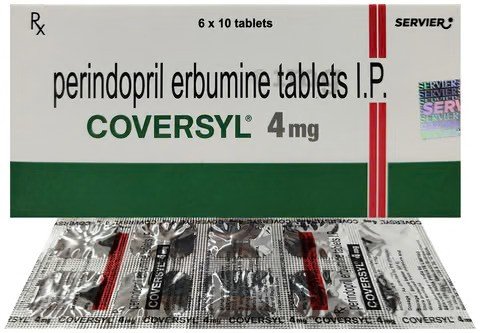
Perindopril Erbumine Tablets 4mg | Cardiac / Hypertension
Disclaimer: Products listed on this website are intended for qualified business buyers, research, formulation, compounding, or regulated pharmaceutical use only. Products are not intended for direct consumer use. Import permission, registration, customs clearance, and local regulatory compliance are the responsibility of the buyer in their respective country.


This document summarizes key information about Perindopril Erbumine 4 mg tablets. The content covers indications, dosage, mechanism of action, contraindications, common adverse effects, precautions, drug interactions, storage, and patient counselling points. Source information is commonly found on medicine information sites such as 1mg — Coversyl 4mg Tablet. Use this document for quick reference; always follow the prescribing information provided by the manufacturer and consult a healthcare professional for clinical decisions.
| Attribute | Details |
|---|---|
| Generic name | Perindopril erbumine |
| Strength | 4 mg |
| Dosage form | Tablet |
| Therapeutic class | ACE inhibitor (antihypertensive) |
| Common brand name | Coversyl (brand example) |
| Indications | Hypertension, stable coronary artery disease, heart failure (adjunctive use) |
| Prescription status | Prescription required |
| Typical manufacturer note | Refer to product packaging for manufacturer and batch details |
Perindopril is an angiotensin-converting enzyme (ACE) inhibitor. It is a prodrug (perindopril erbumine) that is converted to the active metabolite perindoprilat. It lowers blood pressure by blocking ACE, which reduces formation of angiotensin II and decreases vasoconstriction and aldosterone secretion, leading to reduced peripheral resistance and lowered blood pressure.
Management of primary hypertension (as monotherapy or in combination).
Secondary prevention in patients with stable coronary artery disease to reduce cardiovascular events (per product-specific indications).
Adjunctive treatment of symptomatic heart failure in selected patients (follow local guidelines).
Usual dosing depends on indication, renal function, and prior antihypertensive therapy. The following are typical guidance points; always individualize per prescriber and product monograph.
Starting dose for hypertension in adults: often 4 mg once daily or 2 mg once daily depending on baseline blood pressure and tolerability.
Maintenance dose: commonly 4–8 mg once daily, adjusted based on response. Some regimens use 8 mg as a maximum daily dose divided or once daily per product instructions.
In elderly patients or those with volume depletion: start at a lower dose (for example 2 mg) and titrate cautiously.
Renal impairment: dose adjustment may be required; monitor renal function and potassium. Use caution and follow local prescribing guidelines.
Administration: tablets are usually taken once daily, with or without food, at a consistent time each day.
History of angioedema related to previous ACE inhibitor therapy.
Hereditary or idiopathic angioedema.
Pregnancy — ACE inhibitors are contraindicated in pregnancy due to risk of fetal harm.
Concomitant use with sacubitril-containing medications (ARNI) — do not administer within 36 hours of switching between an ACE inhibitor and an angiotensin receptor neprilysin inhibitor (ARNI) because of increased risk of angioedema.
Known hypersensitivity to perindopril or any component of the formulation.
Angioedema: may occur at any time; discontinue immediately and provide emergency treatment if airway compromise or swelling develops.
Hypotension and syncope: more likely in volume-depleted patients; correct volume depletion before initiating therapy.
Renal function: monitor serum creatinine and potassium, particularly in patients with renal artery stenosis, renal impairment, or heart failure.
Hyperkalemia: risk increased when used with potassium-sparing diuretics, potassium supplements, or potassium-containing salt substitutes.
Pregnancy and breastfeeding: contraindicated in pregnancy; advise women of childbearing potential to use effective contraception and discontinue the drug if pregnancy is planned or suspected. Consult a clinician regarding breastfeeding.
Dizziness or lightheadedness (especially at initiation or with dose increases).
Cough (dry, persistent) — a class effect of ACE inhibitors; may require switching to an ARB if intolerable.
Headache, fatigue.
Gastrointestinal upset (rare).
Less commonly: changes in renal function, hyperkalemia, rash.
Important interactions to consider; always review a patient’s medication list before starting perindopril.
Potassium-sparing diuretics, potassium supplements, or potassium-containing salt substitutes: increased risk of hyperkalemia.
Other antihypertensives (diuretics, calcium channel blockers, beta-blockers): additive hypotensive effects — monitor blood pressure.
Nonsteroidal anti-inflammatory drugs (NSAIDs): may reduce antihypertensive effect and increase risk of renal impairment.
Lithium: ACE inhibitors may increase lithium levels and risk of lithium toxicity — monitor levels closely if coadministration is necessary.
Aliskiren: avoid in patients with diabetes or renal impairment when combined with ACE inhibitors due to risk of adverse renal outcomes and hyperkalemia.
ARNI (sacubitril/valsartan): must not be given within 36 hours of an ACE inhibitor; risk of angioedema is increased.
Pregnancy: contraindicated. Exposure during the second and third trimesters can cause fetal toxicity (including renal dysfunction, oligohydramnios, skull hypoplasia).
Breastfeeding: consult prescriber; alternative therapies may be preferred.
Elderly: may be more susceptible to hypotension and renal impairment; start at lower doses and monitor.
Renal impairment: dose adjustment and monitoring recommended; use caution in bilateral renal artery stenosis.
Blood pressure and heart rate regularly after initiation and dose changes.
Serum creatinine and electrolytes (potassium) at baseline and periodically thereafter.
Signs of angioedema or persistent cough.
Store tablets in a cool, dry place away from direct sunlight and moisture. Keep out of reach of children. Follow packaging for shelf life and storage temperature recommendations.
Take the medication at the same time each day, with or without food.
Do not stop the medication abruptly without consulting your doctor.
Be aware of symptoms of low blood pressure (dizziness, lightheadedness) especially when standing up; rise slowly from sitting or lying positions.
Report swelling of the face, lips, tongue, or throat immediately (angioedema).
Inform your doctor about all other medications, including over-the-counter drugs, herbal products, and supplements.
Women of childbearing potential should use effective contraception and notify their physician if pregnancy is planned or suspected.
| Product Name | Perindopril Erbumine Tablets |
| Category | All Medicines, Cardiac / Hypertension |
| Form | Raw Powder |
| Grade | As per available specification |
| Documents | COA, MSDS, Invoice, Packing List |
| Packing | As per order quantity |
| MOQ | On request |
| Shipment | Air cargo / courier / buyer-approved route |
| Use | B2B, formulation, compounding, research & qualified buyer supply |
| Disclaimer | Subject to buyer country regulations |
| Strength | 4mg |
|---|

Only logged in customers who have purchased this product may leave a review.
Disclaimer: Products listed on this website are intended for qualified business buyers, research, formulation, compounding, or regulated pharmaceutical use only. Products are not intended for direct consumer use. Import permission, registration, customs clearance, and local regulatory compliance are the responsibility of the buyer in their respective country.
